Synesthesia is a stable blending or linking of senses, concepts, and perceptions. A person might experience letters or numbers as having colours, music as shapes or movement, words as tastes, pain as colour, or calendars and numbers as occupying positions in space.
The important feature is that the association is usually automatic, specific, and consistent over time. It is not the same as liking a metaphor, choosing an aesthetic, or imagining something on purpose.
How Synesthesia Can Affect People
For many people, synesthesia is neutral, enjoyable, or helpful. It can support memory, pattern recognition, creativity, identity, music, language, and learning. Some people only realise it is unusual when they discover that other people do not experience the same associations.
It can also be distracting, intense, or hard to explain. Certain sounds, words, numbers, names, or places may feel unpleasant because of the extra association they trigger. Synesthesia can overlap with broader sensory processing differences, but it is not itself an autism diagnosis or a mental health condition.
If these experiences are new, distressing, linked with seizures, migraine, medication changes, head injury, hallucinations, or other sudden neurological changes, seek medical advice rather than treating this as ordinary developmental synesthesia.
Might This Be Synesthesia?
This is not a scored test. If several of these feel familiar, the next sensible step is the formal Synesthesia Battery.
Formal Assessment
The best-known standardised option is the Synesthesia Battery, based on consistency testing rather than a simple questionnaire. It asks about different kinds of synesthesia and then tests whether your associations remain stable across repeated choices.
It is an external research tool with user accounts and private stored results, so Autistic Empire is not replicating it here.
The Battery works best on a computer rather than a phone.
Short Videos

What color is Tuesday?
TED-Ed explainer by Richard E. Cytowic. About 4 minutes. Watch on YouTube.
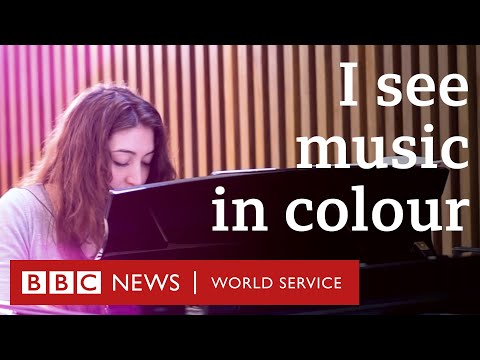
A musician who sees colour and feels textures
BBC World Service segment. About 4 minutes. Watch on YouTube.
Sources
Source context: Eagleman DM, Kagan AD, Nelson SS, Sagaram D, Sarma AK. A standardized test battery for the study of synesthesia. Journal of Neuroscience Methods. 2007;159(1):139-145.
Additional context: Simner J, Mulvenna C, Sagiv N, et al. Synaesthesia: the prevalence of atypical cross-modal experiences. Perception. 2006;35(8):1024-1033.